Training and International Cooperation
The Department of Training and International Cooperation is one of the Thirteen (13) – Departments of the Institute and is primarily responsible for organising and coordinating the capacity building trainings of the Institute.
These training programmes are aimed at equipping Legislators and support staff of the National Assembly and State Houses of Assembly with the requisite skills in managing the Legislature.
The Department also provides capacity building training to other Democratic institutions such as the Executive, the Judiciary, relevant NGOs and CSOs as well as others across the sub-region.
Training and International Cooperation Department: Advancing Legislative Excellence and Democratic Governance through Capacity Building and Strategic Partnerships
The Training and International Cooperation Department of National Institute for Legislative and Democratic Studies has continued to play a pivotal role in strengthening democratic governance, legislative practice, institutional effectiveness, and parliamentary administration in Nigeria and beyond. The Department has significantly expanded the frontiers of legislative capacity building, international cooperation, and parliamentary development across national, sub-national, regional, and continental levels.
Established to provide high-level legislative studies, training, research, and policy support, NILDS has remained committed to building the capacities of legislators, legislative staff, aides, parliamentary institutions, and democratic actors to effectively discharge their constitutional responsibilities. Through the strategic activities of the Training and International Cooperation Department, the Institute has become a leading hub for parliamentary strengthening and democratic consolidation in Africa.
Mandate and Strategic Focus
The Department derives its mandate from the broader objectives of NILDS, particularly in the areas of legislative training, institutional support, democratic governance, and international parliamentary cooperation. Its primary responsibility is to design and implement capacity-building programmes tailored toward improving legislative efficiency, policy development, parliamentary administration, legislative drafting, oversight functions, constituency representation, and democratic accountability.
The Department delivers both supply-driven open programmes and demand-driven tailored courses. While the open programmes are accessible to participants from the National Assembly, State Houses of Assembly, Local Government Councils, Ministries, Departments and Agencies, the tailored programmes are specifically designed to address the unique operational and institutional needs of client organisations.
Over the years, the Department has organised:
• Workshops, seminars, conferences, retreats, lecture series, and roundtable discussions;
• Tailored short-term programmes for legislators and legislative staff;
• Exchange visits, benchmarking tours, and study attachments;
• International training programmes for parliamentary officials and lawmakers;
• Specialised legislative drafting and policy analysis workshops;
• Leadership and governance programmes;
• ICT and digital transformation trainings;
• Research, protocol, communication, and official reporting programmes.
These interventions have consistently enhanced the quality of legislative practice and democratic governance in Nigeria and across the African region.
Growth and Expansion of Capacity Building Programmes
Between 2019 and 2022, the Department witnessed remarkable growth in the implementation of training programmes. The number of annual training programmes increased steadily, with 93 programmes implemented in 2019, rising to 114 in 2021 and 103 in 2022. This growth reflected the Institute’s increasing commitment to legislative strengthening and institutional development.
A major milestone recorded during this period was the deliberate expansion of capacity-building programmes to State Houses of Assembly and Local Government legislative institutions. Prior to this intervention, most parliamentary development initiatives were concentrated at the federal level. However, recognising the strategic importance of sub-national legislatures in democratic governance, NILDS broadened its focus to include state and local legislative institutions where institutional capacity gaps were more pronounced.
As a result, over 49 specialised workshops and seminars were organised for State Legislators between 2019 and 2022, involving more than 1,000 participants. These interventions significantly improved legislative competence, committee effectiveness, law-making quality, and oversight functions at the sub-national level.
International Cooperation and Strategic Partnerships
One of the defining achievements of the Department has been the strengthening of international parliamentary cooperation and cross-border institutional partnerships. Through strategic collaborations with regional and international parliamentary institutions, the Department facilitated exchange programmes, benchmarking visits, and specialised international trainings for legislators and parliamentary officials.
Under the stewardship of Prof. Abubakar O. Sulaiman, NILDS deepened cooperation with institutions and parliamentary bodies in:
• Uganda
• Ghana
• Gambia
• Somaliland
• Malawi
• Benin Republic
• ECOWAS Parliament
• South Africa Gauteng Provincial Legislature
These partnerships facilitated benchmarking visits, parliamentary diplomacy, exchange of experiences, and collaborative learning initiatives aimed at strengthening legislative institutions across Africa.
Notably, the Institute hosted and trained officials from the ECOWAS Parliament on evidence-based parliamentary practice, diplomacy, stakeholder engagement, oversight functions, and modern data-driven decision-making processes. It also organised workshops on the interpretation and application of ECOWAS Treaties and Protocols for legal officers across the region.
Innovations in Legislative Capacity Building
A major innovation was the adoption of virtual and hybrid training models during the COVID-19 pandemic. In response to the restrictions caused by the pandemic, the Department leveraged ICT platforms to sustain uninterrupted legislative training, seminars, workshops, and dialogue sessions. This transition strengthened NILDS’ digital learning architecture and ensured continuity in legislative capacity building during a critical global period.
Training of Legislators, Legislative Staff and Aides
The Department achieved unprecedented milestones in training legislators, legislative staff, aides, and parliamentary support personnel.
Between 2019 and 2022:
• Over 4,167 legislators participated in various local and international programmes;
• More than 3,000 legislative aides from the Senate and House of Representatives were trained;
• Thousands of parliamentary staff benefited from workshops on legislative administration, drafting, research, budgeting, ethics, oversight, ICT, and governance.
.
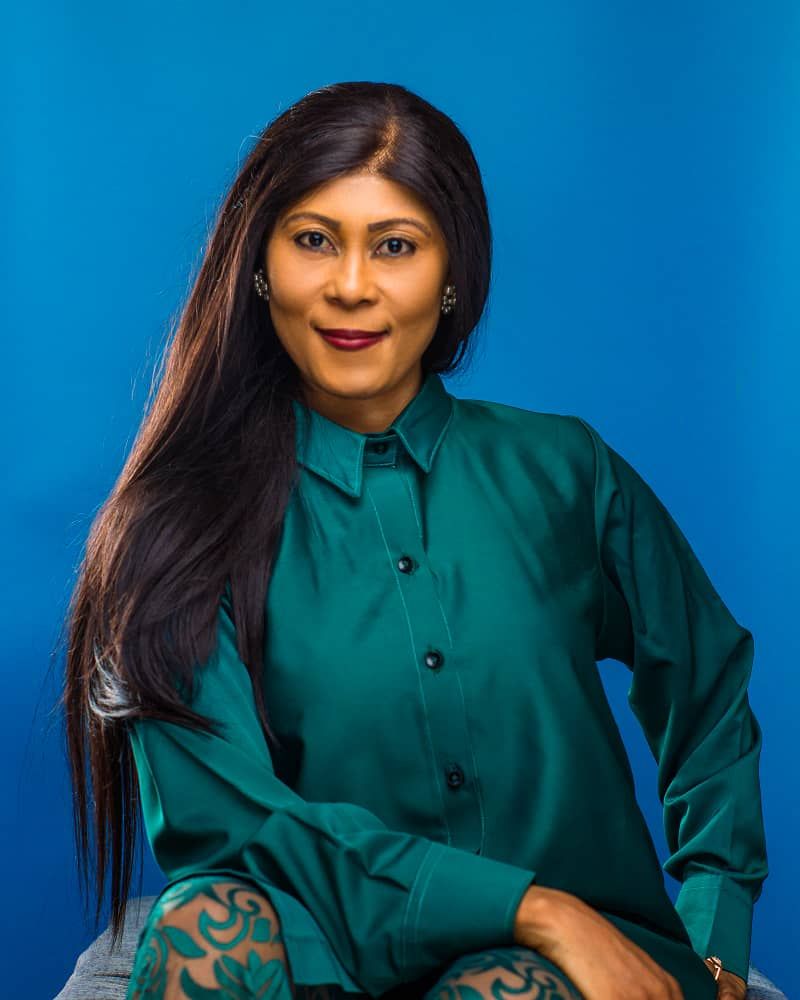
Adejoke Akinsanmi
Joke Akinsanmi is a consummate public relations specialist and institutional leader whose professional journey represents a compelling convergence of broadcast journalism, performing arts and mass communication. With over two decades of progressive experience in public service, she has distinguished herself through a career defined by intellectual versatility, strategic communication, institutional loyalty, partnership development and commitment to excellence.
Her expertise is further complemented by a Master's degree in Elections and Party Politics, giving her a substantive understanding of democratic processes, political institutions and the dynamics of representative governance.
The breadth of her professional experience is reflected in the confidence reposed in her by leaderships of her institution, where she served as Media Assistant to two successive Chief Executive Officers and headed the Information, Communication and Protocol Division under both administrations. These responsibilities provided her with extensive exposure to executive communication, institutional protocol, stakeholder engagement, public information management and strategic positioning of an organisation within the broader public sector.
She currently heads the Training and International Cooperation Department of National Institute for Legislative and Democratic Studies (NILDS), an institution at the heart of Nigeria's efforts to strengthen legislative capacity, democratic institutions and effective governance. Over the course of her three-year strategic direction of the Department, she has demonstrated a notable capacity to translate institutional mandates into measurable outcomes, by facilitating over 200 capacity-building programmes, reaching more than 4,000 participants drawn from diverse institutions, professional backgrounds, countries and levels of governance.
Her contribution to international cooperation and institutional diplomacy has equally been significant by playing an instrumental role in mobilising more than 20 benchmarking engagements and strategic institutional linkages involving Parliaments and institutions beyond Nigeria, as well as public and private-sector organisations. These engagements have provided platforms for knowledge exchange, professional learning and institutional collaboration, while contributing to the expansion of NILDS' international visibility, networks and strategic partnerships.
Beyond the formal responsibilities of her office, Joke has repeatedly been entrusted with the leadership of planning and organising committees for major institutional programmes. Her record in this regard demonstrates not only administrative competence, but also the capacity to bring together diverse stakeholders, harmonise competing interests and deliver complex institutional engagements with professionalism and precision. Her leadership style is characterised by strategic foresight, discretion, humility, respect for institutional authority and an exceptional ability to work collaboratively.
Her professional philosophy is deeply rooted in the conviction that leadership is ultimately measured by the value it creates for others. She is therefore a passionate advocate for women's leadership, inclusion and meaningful participation in governance and decision-making. She has consistently championed the advancement of women and the mainstreaming of gender considerations within institutional systems and structures, advocating an environment in which women are not simply represented, but are empowered to contribute meaningfully to policy formulation, leadership and national development.
Her commitment to professional excellence has attracted significant recognition. In 2023, she was named the Overall Best Staff of National Institute for Legislative and Democratic Studies, an honour that affirmed her exceptional dedication, productivity and service. In 2024, The Guardian Newspaper recognised her among Nigeria's 25 Most Exceptional and Value-Adding Female Professionals, acknowledging her professional contributions, leadership influence and role in inspiring women and emerging professionals in corporate governance. In 2026, she was conferred with the Excellent Public Service and Leadership Award by the Advanced Management Academy, in recognition of her contribution to public service, leadership and institutional development.
She is an Associate of the Nigerian Institute of Public Relations (NIPR) and a Fellow of the Chartered Institute of Financial and Investment Analysts of Nigeria. These professional affiliations underscore the breadth of her competence and her commitment to continuous learning, multidisciplinary excellence and the highest standards of professional practice. She is currently pursuing a Doctorate Degree in Strategic Communication, further advancing her intellectual engagement with communication and its implications for governance, leadership, institutional development and society.
Joke embodies a generation of Nigerian professionals whose influence transcends the boundaries of their formal designation. A media professional by training, a communicator by vocation, a public servant by calling, a scholar by aspiration and a leader by impact, she has consistently demonstrated that professional excellence is most meaningful when deployed in the service of people and the greater good.
Her career is a testament to the enduring values of competence, humility, discipline, courage and service. Through the years, she has demonstrated that leadership need not be defined by position alone, but by the capacity to inspire confidence and leave every assignment better than it was found.
In an era in which nations require public servants capable of combining professional competence with a genuine commitment to humanity, Joke Akinsanmi stands as a worthy example of service-driven leadership, one whose influence is measured not merely by the offices she has occupied, but by the people she has empowered, the institutions she has strengthened and the enduring value she continues to add to public service and national development.
Two divisions
The Department is composed of two (2) divisions, namely:
National Training Programmes Division
The Division is responsible for facilitating and coordinating all training programmes and activities within Nigeria.
International Cooperation Division
The Division is responsible for establishing and maintaining capacity-building partnerships with other parliaments, academic institutions, donor partners and facilitating and coordinating all foreign training programmes of Legislators.
Functions of the Department
Coordination of all National and International training programmes/activities for legislators, legislative aides, management staff of the National Assembly and the Institute;
Implementation of the Institute’s annual work plan training programmes in collaboration with individual Departments/Coordinators and Conducting Training Needs Assessments;
Coordinate Zonal Desk Officers (ZDOs) to ensure that proposed partnerships support the strategic objectives of NILDS and provide value;
Develop marketing strategies and market NILDS Programmes to all stakeholders and Provide secretariat services during all training programmes and workshops organised by the Institute.
Seeking, establishing and maintaining training partnerships/relationships with other parliaments, academic institutions and donor partners and Initiate individual research and policy analysis work
Manage and maintain the International Development Partnerships (IDPs) management database system, preparing annual report on Grants/technical support etc
Resource mobilisation from the private sector (corporations, individuals, foundations, NGOs); solicit contributions; and evaluate and assess partnership results
Organisation and coordination of short training courses organised in collaboration with other Institutes/Parliaments within the ECOWAS sub-region and beyond. This is often done in conjunction with the Office of the Director-General;
Organisation and coordination of demand-driven training activities for State Houses of Assembly, Local Government Councils, as well as other public and private institutions that may require the Institute's training services;
Here's what a few of our very Happy Students have to say about us...
When I evaluate the performance of all the Resource Persons, their competencies, the quality of delivery of the papers they presented, I will give the Institute an excellent score with a 5 stars rating.
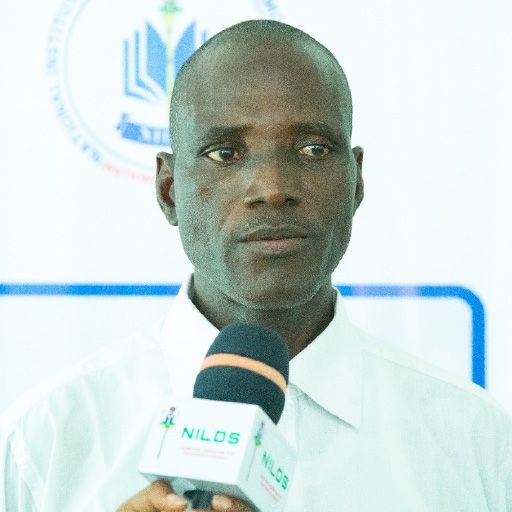
Indeed, my expectations have been met because the first time I came to NILDS in 2018, it was an upgrade from what I learned at Federal Training Center Lagos…attending another training here has helped to further sharpen my skills and exposed me to modern practices in Official Reporting which I will now have to go back home and re-orientate my colleagues about.
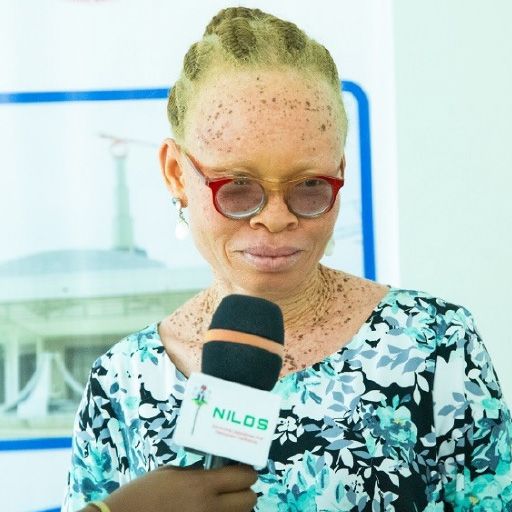
If I could give more than a 5 stars rating to NILDS, I would. I look forward to attending more training programmes because learning is continuous and NILDS, as a very important organization for the Legislature, has shown it has the ability to build our capacity to bring about positive change in our respective parliaments.