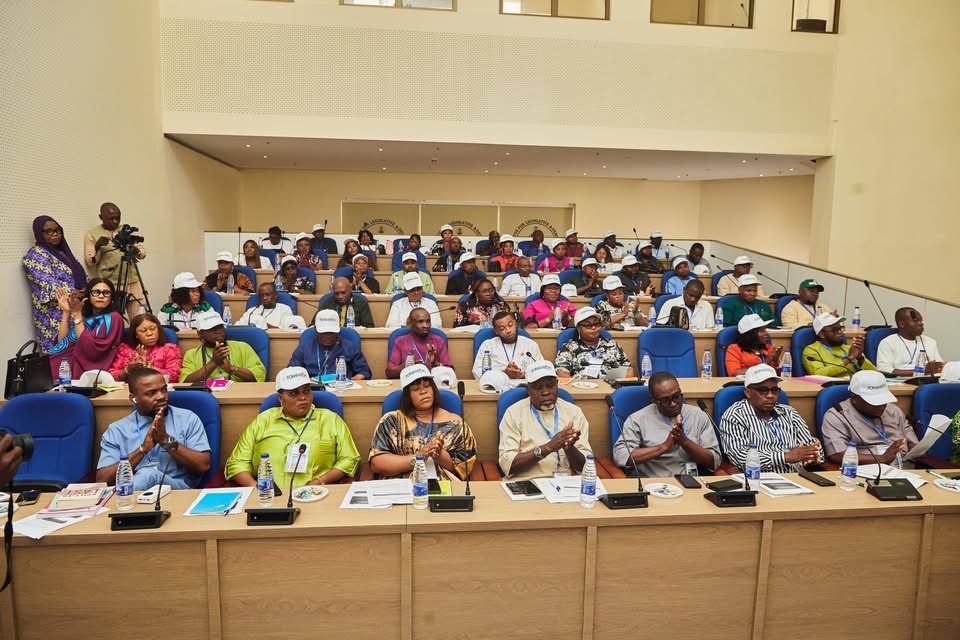
National Institute for Legislative and Democratic Studies (NILDS), in collaboration with the Independent Corrupt Practices and Other Related Offences Commission (ICPC), held a sensitisation workshop on 4 November 2026 for its management staff to strengthen ethical conduct, transparency and accountability within the Institute.
The programme, organised through NILDS’ Anti-Corruption and Transparency Unit (ACTU), followed the inauguration of the Unit and focused on promoting preventive anti-corruption measures, improving internal processes and reinforcing a culture of institutional integrity.
Declaring the workshop open, the Director General of NILDS, Prof. Abubakar O. Sulaiman, said the Institute must demonstrate the values of integrity, professionalism and accountability that it promotes through its legislative capacity-building and democratic governance programmes.
He stressed that preventing corruption requires more than policies and regulations, noting that management and staff must demonstrate ethical leadership, comply with established procedures and ensure that public resources are used for their intended purposes.
Prof. Sulaiman also called for stronger internal controls, transparent procurement processes, proper documentation and effective reporting channels to address institutional weaknesses that could create opportunities for corrupt practices. He reaffirmed NILDS’ commitment to supporting ACTU and sustaining its collaboration with the ICPC.
In his address, the ICPC Director, Mr. Olusegun Adigun, FSI, described ACTU as an important component of the Commission’s preventive anti-corruption framework, designed to identify institutional vulnerabilities and promote ethical standards across ministries, departments and agencies.
He explained that the fight against corruption must extend beyond investigation and prosecution to include system reviews, corruption risk assessments, staff sensitisation and improved administrative procedures. He also urged ACTU members to demonstrate integrity, impartiality and professionalism in carrying out their responsibilities.
During the technical presentation, an ICPC resource person Barr. Bimpe Abodunrin. explained that ACTU’s responsibilities include preliminary fact-finding, monitoring compliance with established rules, identifying corruption risks and making recommendations to management. The resource person clarified that the Unit is not a parallel disciplinary authority and cannot conduct coercive interrogations.
The presentation also emphasised confidentiality and fairness in handling petitions, warning against disclosing allegations before they have been properly examined. It highlighted the need for an internal whistleblowing policy that provides clear reporting channels, protects genuine whistleblowers and discourages malicious petitions. The resource person cited Section 64 of the ICPC Act, which provides penalties for knowingly submitting false information.
Other recommendations included establishing a staff recognition system to encourage ethical conduct, providing ACTU with the necessary institutional support and ensuring that its recommendations receive appropriate management attention.
The interactive session featured questions and contributions from NILDS management, including concerns about the possibility of malicious whistleblowing damaging reputations. Participants sought clarification on safeguards against false allegations, the relationship between ACTU and management disciplinary committees, and the Unit’s role in conducting system studies. They also called for greater attention to anti-corruption education among younger generations, including possible engagement with relevant education authorities.
In clarifying the issues raised, the ICPC representatives explained that ACTU may observe relevant management or disciplinary committee proceedings rather than establish parallel investigative structures. They further noted that while the Commission conducts comprehensive system studies, ACTUs are expected to undertake focused annual reviews of specific institutional processes, including recruitment and compliance with the Federal Character Principle.
The programme reinforced the importance of sustained collaboration, capacity building and effective internal accountability mechanisms in promoting ethical conduct and strengthening public confidence in government institutions.