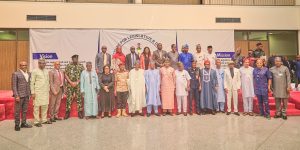
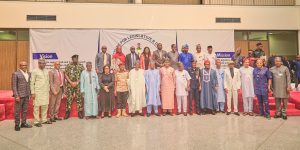
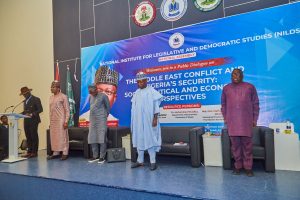
National Institute for Legislative and Democratic Studies (NILDS) has convened a public lecture examining the socio-political, economic and security implications of the Middle East conflict for Nigeria on 2nd November, 2026.
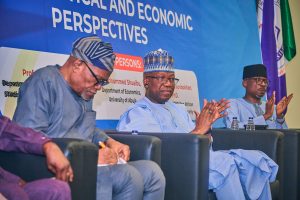
The lecture, themed “The Middle East Conflict and Nigeria’s Security: Socio-Political and Economic Perspectives,” brought together security experts, academics, policy practitioners and representatives of government institutions to examine how international tensions could affect Nigeria’s economy, domestic stability and national security.
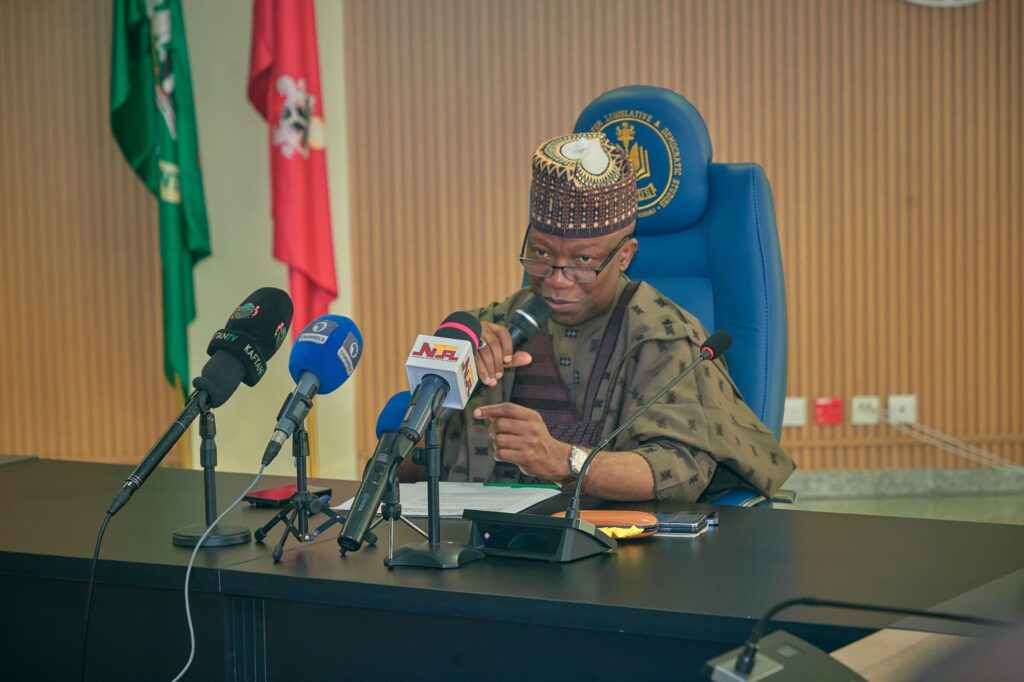
In his opening remarks, the Director General of NILDS, Prof. Abubakar O. Sulaiman, called for constructive engagement on the links between global instability and Nigeria’s domestic challenges. He emphasised the need for practical policy responses to protect the country’s economic and security interests from external shocks.
Discussions highlighted the potential economic consequences of disruptions to global energy supplies and maritime routes, including rising fuel costs, increased transportation expenses, inflationary pressures and reduced household purchasing power. Although higher international crude oil prices may increase government revenue, participants noted that the benefits could be offset by rising domestic costs and wider economic pressures.
The lecture also examined the security implications of prolonged conflict in the Middle East, including the potential for extremist groups to exploit international tensions for recruitment and propaganda. Participants stressed the importance of addressing misinformation, social divisions, poverty and other domestic vulnerabilities that could heighten insecurity.
Contributing to the discussion, Prof. Adam Ahmed, Provost of the Centre for Strategic Research and Studies at the National Defence College, who represented the Commandant, Rear Admiral Abdullahi Ahmed Scholar, highlighted the strategic importance of the Middle East to global trade and energy security. He noted that disruptions to critical maritime routes could have far-reaching consequences for countries such as Nigeria, whose economy remains significantly linked to the oil and gas sector.
Other participants included Prof. Warisu O. Alli of the Department of History and International Studies, University of Jos; Maj. Gen. Mathias Efeovbokhan (Rtd), PhD, Managing Director and Chief Executive Officer of the Pan African Foundation for Peace and Security; and Dr. Mohammad Shuaibu of the Department of Economics, University of Abuja.
Also identified among the dignitaries were Prof. Zubairu Dagona, Director of Legislative and Civic Education at NILDS; Dr. Vincent Gisaor; Dr. Ezekiel Omibiyo; Dr. Pauline Osasum; Brother Nick Agule, Team Lead of the Benue Economic Advisory Team; and Maj. Gen. Lasisi Adegboyega (Rtd), PhD. Representatives of NATHCOM, Voice of Nigeria and NIPERA were also listed among the attendees.
Participants called for a more proactive approach to national resilience, including stronger legislative oversight of security spending, greater investment in domestic refining and energy infrastructure, effective public communication and a foreign policy approach guided by national interests, international law and peaceful dispute resolution.
The discussions underscored the importance of integrating economic resilience, effective governance, intelligence coordination and social cohesion into Nigeria’s national security strategy.
The lecture reaffirmed the importance of research-informed policy development and legislative engagement in addressing emerging threats to Nigeria’s economic stability and national security.