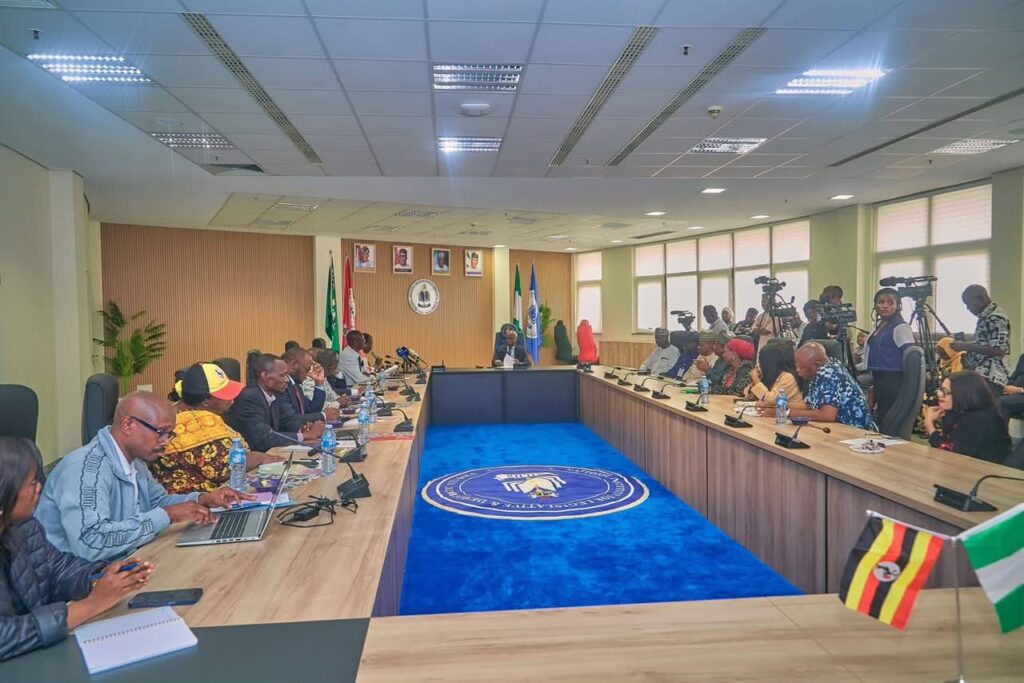
National Institute for Legislative and Democratic Studies (NILDS) and the Africa ICT Alliance (AfICTA) have explored areas of collaboration aimed at strengthening capacity in digital governance, artificial intelligence (AI), cybersecurity and internet governance.
This was disclosed during a courtesy visit by a delegation of AfICTA, led by its Founder and former Chairperson, Dr. Jimson Olufuye, to the Institute on Wednesday
Dr. Olufuye said AfICTA, which began in 2012 with six African countries and has expanded to 44 countries, is committed to advancing digital transformation and sustainable development through stakeholder engagement and advocacy.
He identified the domestication of international frameworks, including the African Union Convention on Cyber Security and Personal Data Protection, as areas requiring stronger legislative and institutional engagement. He also offered AfICTA’s expertise to support NILDS’ capacity-building efforts through physical and virtual faculty support.
The Chairperson of AfICTA, Dr. Olusegun Olugbile, highlighted the need for stronger institutional capacity and legislative frameworks on emerging areas such as AI governance, cybersecurity, and internet governance.
He stressed the importance of distinguishing cybersecurity from cybercrime and urged greater Nigerian participation in global and African internet governance platforms.
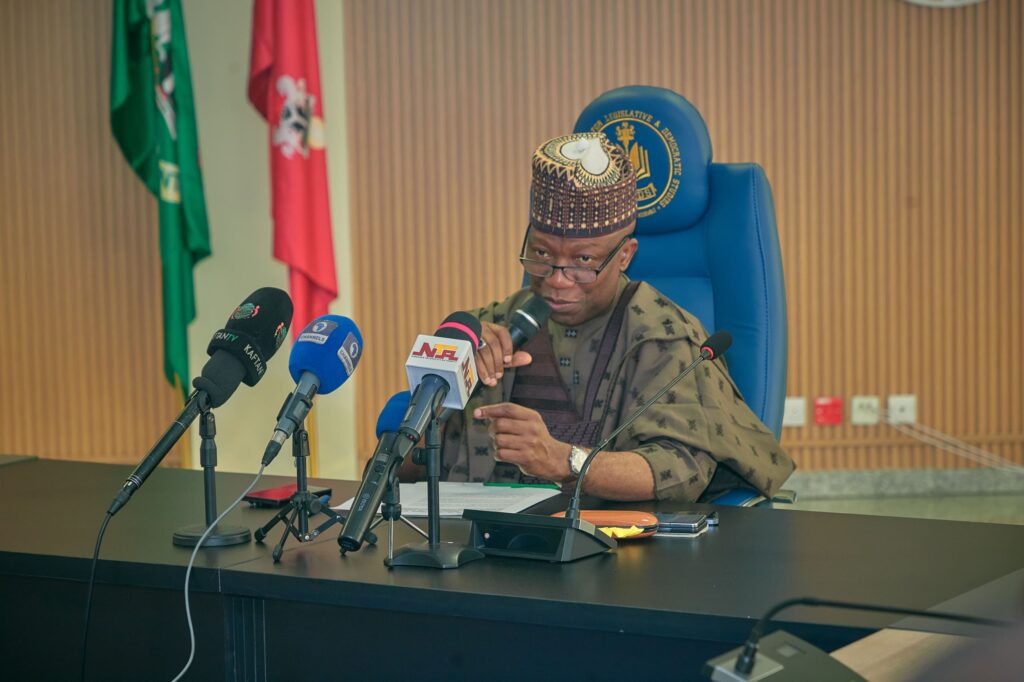
Responding, the Director General of NILDS, Prof. Abubakar O. Sulaiman welcomed the delegation and acknowledged the growing importance of digital technology to governance, security, and national development.
The DG noted that NILDS had continued to explore digital solutions to strengthen legislative processes, citing the Institute’s experience during the COVID-19 lockdown, when virtual platforms were deployed to support engagement with the National Assembly.
Prof. Sulaiman stressed the need for Nigeria to strengthen its legislative framework and institutional capacity in AI and digital governance, noting that NILDS has a responsibility to champion advocacy and capacity development within the parliamentary system.
He proposed the establishment of a joint technical team comprising representatives of NILDS and AfICTA to identify areas of collaboration, particularly capacity enhancement, advocacy and the development of toolkits to support legislative oversight of technology and security-related sectors.
The DG further suggested that the proposed collaboration could extend to committees of both chambers of the National Assembly and subnational legislatures, with NILDS serving as a focal point for coordinating the initiative.
He directed that three representatives each from NILDS and AfICTA should meet within two weeks to develop a framework for the partnership and determine the need for a formal Memorandum of Understanding (MoU).
Prof. Sulaiman reaffirmed the Institute’s commitment to the proposed collaboration, noting that stronger partnerships and shared expertise were essential to positioning Nigeria to effectively respond to emerging technological and digital governance challenges.